Correct sizing and airflow focus
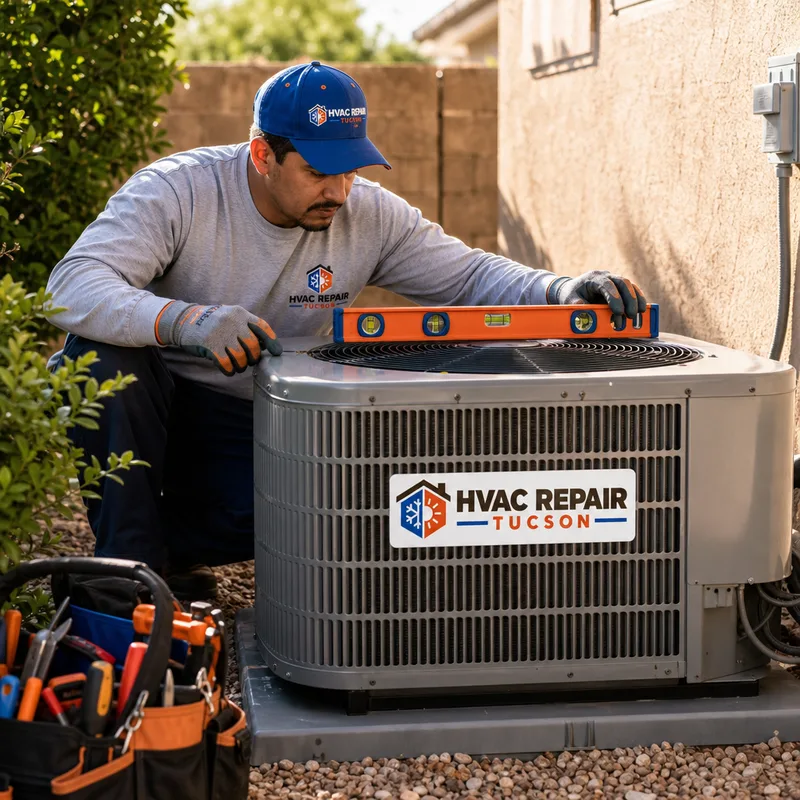
We prioritize load and airflow so the system can cool evenly, avoid short-cycling, and maintain stable comfort through peak summer demand.
Serving Tucson, Arizona & surrounding areas
24/7 Emergency Response
HVAC installation service · Tucson, Arizona
Replace an aging system or install a new one with clear equipment options, correct sizing, and a clean, code-aware install built for Tucson heat.
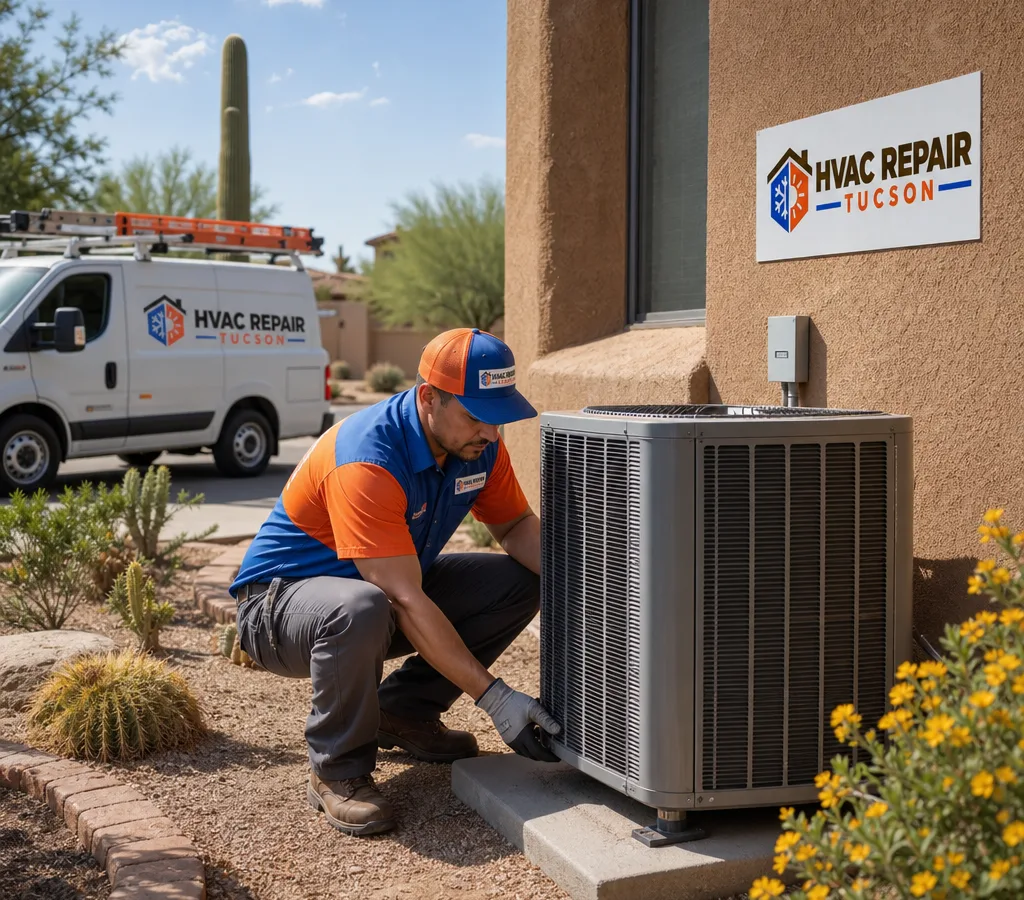
Residential HVAC installation planned for Tucson heat
When you search for HVAC installation Tucson, you are usually trying to solve one of two problems: an older system that cannot keep up anymore, or a new-to-you home that needs dependable cooling fast. Either way, the install matters as much as the brand on the box.
At HVAC Repair Tucson, our installs are built around the basics that determine comfort and reliability in Southern Arizona: proper load sizing, correct airflow, tight refrigerant piping, and a setup that matches your home and your usage. A system that is oversized or poorly commissioned can short-cycle, struggle with humidity control during monsoon season, and wear out parts early.
If you are also dealing with breakdowns right now, our team handles HVAC repair in Tucson as well, but this service is focused on doing the install correctly so your new equipment can run the way it was designed to run.
Complete installation scope
Most installation problems trace back to skipped steps. A solid install is a scope of work, not a quick swap.
Typical HVAC installation work can include:
Tucson homes vary a lot, from mid-century construction to newer builds with tighter envelopes. We tailor the scope to what your home actually needs rather than forcing every install into the same template.
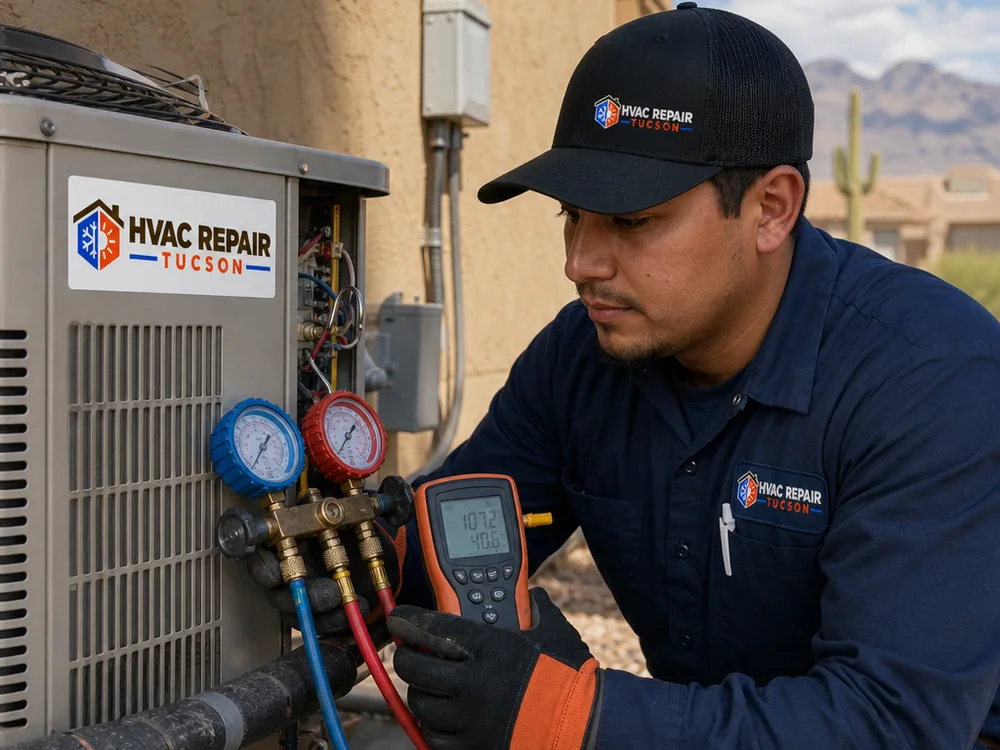
Installation priorities
We prioritize load and airflow so the system can cool evenly, avoid short-cycling, and maintain stable comfort through peak summer demand.
You get a straightforward written plan for what is being installed, what is being reused, and what is being updated before work begins.
Condensate routing, disconnects, and safeties are handled carefully because small details are where many install callbacks come from.
If ducts are undersized, leaking, or poorly balanced, we will explain what that means for performance and what practical fixes look like.
After installation, we test and verify operation rather than assuming it is correct. This is where many problems are caught early.
Built around Southern Arizona homes
Sustained summer demand, varied construction, rooftop exposure, dust, and monsoon moisture all influence installation choices.
Tucson's long cooling season puts continuous stress on compressors, capacitors, and airflow. That is why the install details matter: the refrigerant charge has to be correct, the condenser needs proper clearance, and the indoor side needs enough return and supply airflow to move heat out of the house.
Homes around Catalina Foothills often have multi-level layouts and solar exposure differences that make zoning or airflow balancing worth discussing at install time. In Oro Valley and Marana, newer construction can be tighter, so airflow setup and duct sealing can have an outsized impact on comfort. Central Tucson includes many older homes where duct condition, attic insulation, and return sizing can limit what a new system can do unless those constraints are addressed.
Monsoon season is another reason we pay attention to drains and overflow protection. Short bursts of humidity do not last all year, but they can create condensate loads that reveal weak points in an install.
If you are comparing a few companies, ask each HVAC installer Tucson candidate how they size equipment, what commissioning tests they run after startup, and what they recommend if ductwork is not supporting the target airflow.
From evaluation to walkthrough
A defined sequence helps protect your home, clarify decisions, and verify performance before the installation is complete.
We look at your existing system, home layout, ductwork, and comfort goals, then confirm sizing using accepted industry methods rather than rule-of-thumb tonnage.
You get equipment options and an install plan that spells out what is included, what is optional, and what needs attention for best performance.
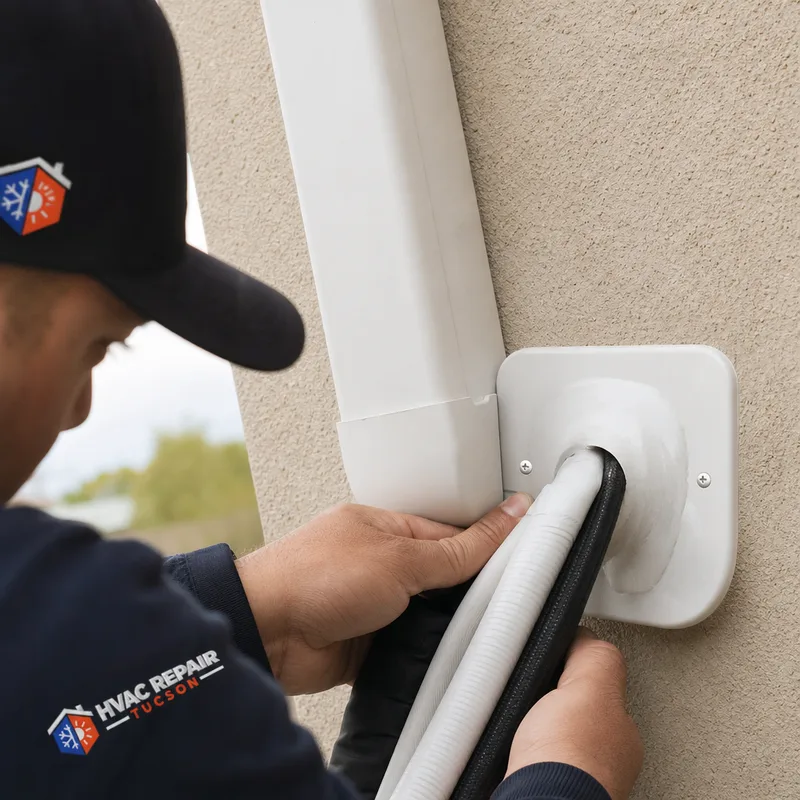
We protect work areas, remove old equipment safely, set new equipment properly, and handle electrical, refrigerant lines, and condensate routing with attention to detail.
We test operation, verify refrigerant charge and airflow, and confirm the system is delivering the expected temperature change across the coil.
We show you thermostat settings, filter size and replacement cadence, and what to watch for in the first weeks of operation.
Installation cost guidance
Most HVAC installation projects in Tucson typically range from about $6,000 to $15,000+, depending on system type, capacity, efficiency level, and whether ductwork or electrical updates are needed. A straightforward change-out is often at the lower end, while full system replacements that include duct modifications, line-set replacement, or added controls can land higher.
Your final price changes with equipment match-up—condenser and coil—refrigerant line condition, attic access, permit requirements, and how much duct sealing or balancing is required for proper airflow. The exact cost is confirmed after an on-site evaluation and written scope.
Practical answers before installation
Most installations take 1 day for a like-for-like change-out, while projects that need duct changes, electrical upgrades, or a new line set can take 2 days or more. Timing also depends on access—tight closets or attic platforms—and whether startup testing reveals airflow corrections that should be made before finalizing the install.
Many HVAC replacements and new installs require a permit and inspection, especially when electrical work or equipment replacement is involved. Requirements can vary by jurisdiction within the Tucson area, so we confirm what applies to your address during the estimate process and build it into the scope.
Replacing the full matched system is often the safest route because the indoor coil and outdoor condenser are designed to work together for capacity and efficiency. Mixing old and new components can create compatibility issues and performance limits, so we review the condition and model compatibility before recommending a partial replacement.
Yes, but duct condition and sizing can limit what the new equipment can deliver. If ducts are leaking, undersized, or poorly balanced, the system may be noisy or struggle to move enough air. We check duct sizing and airflow and then lay out practical options such as sealing, returns, or targeted duct improvements.
A mid-to-high efficiency system can make sense in Tucson because cooling demand is high, but the best choice depends on your budget, how long you plan to stay, and your home's ductwork and insulation. We will show you a few equipment tiers and explain what you gain with each, then size the system correctly so you actually realize the benefit.
Clear a path to the indoor unit—closet, garage, or attic access—and to the outdoor unit, secure pets, and plan for brief thermostat downtime. If your air handler is in an attic, having a clear attic entry and stable storage moved away from the work area helps the install go faster and keeps the workspace safer.
Plan your new comfort system
Tell us what you have now and what you want to improve. We will confirm sizing, walk you through equipment options, and provide a written scope for a clean, reliable Tucson install.