Uneven heating or cooling
We check refrigerant charge, coil condition, airflow, and duct restrictions. Uneven rooms can be a system issue or an airflow issue, and the fix depends on which is actually failing.
Serving Tucson, Arizona & surrounding areas
24/7 Emergency Response
Heat pump repair service · Tucson, Arizona
If your system is blowing lukewarm air, short-cycling, or getting loud, our technicians diagnose the cause quickly and get your comfort back with clear options before any work starts.
Measured heat pump diagnostics for Tucson homes
A tucson heat pump has to handle long cooling runs, dusty air, and big temperature swings between day and night. When something is off, you feel it fast: rooms that never quite reach setpoint, airflow that fades, or a unit that runs constantly and still falls behind.
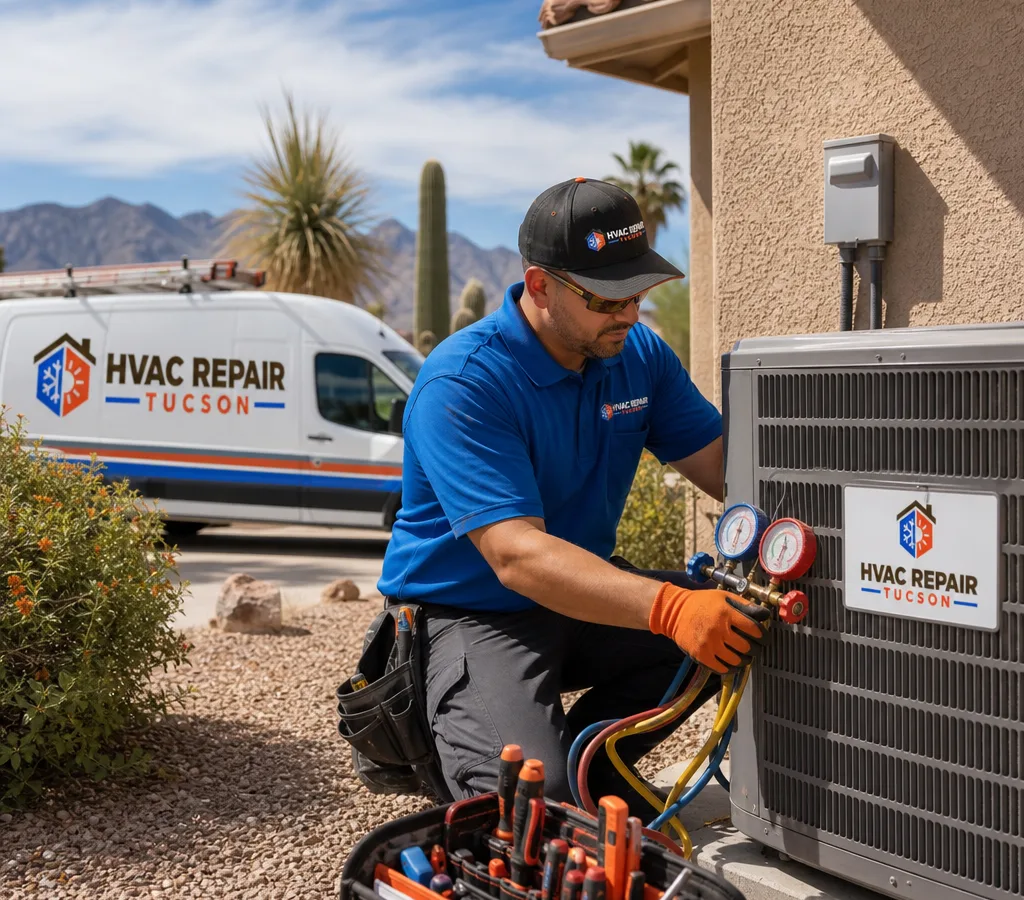
HVAC Repair Tucson focuses on troubleshooting and repair, not guesses. We start by confirming what the equipment is doing—and what it is not doing—through refrigerant pressures and temperatures, electrical readings, airflow and static pressure, and basic control operation. From there we explain the likely failure, the parts involved, and what makes sense to repair now versus what you might plan for later.
If you are also comparing providers for broader HVAC Repair, we approach heat pump problems the same way we approach any comfort call in Tucson: prove the issue, document the condition, then repair to manufacturer specs.
Heat pump symptoms
We check refrigerant charge, coil condition, airflow, and duct restrictions. Uneven rooms can be a system issue or an airflow issue, and the fix depends on which is actually failing.
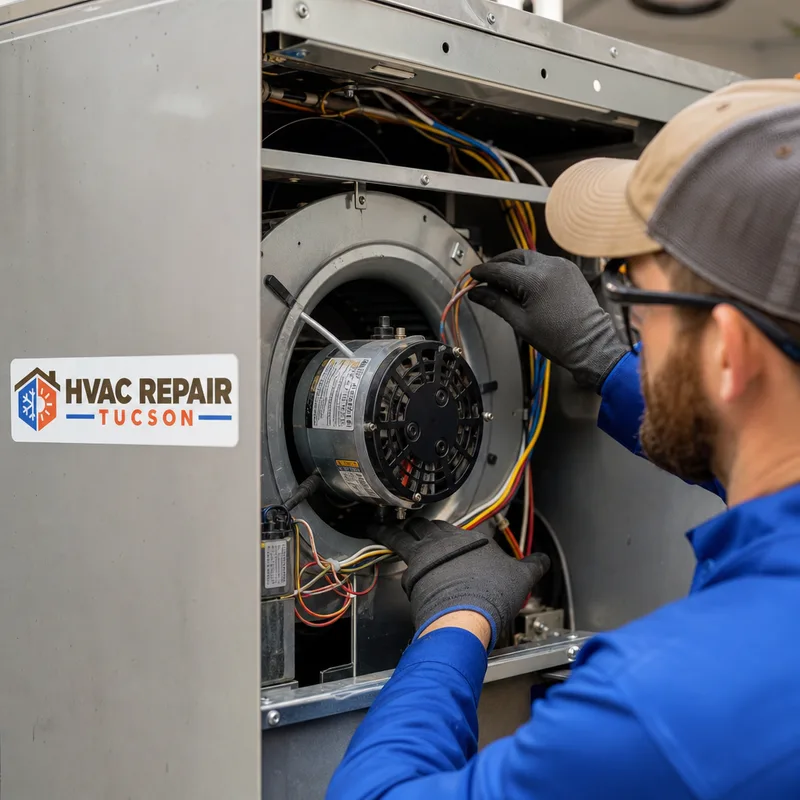
Dirty filters, plugged coils, blower motor and capacitor problems, and duct leaks can all drop airflow. We measure static pressure and verify blower performance before recommending a repair.
Rattles, buzzing, and grinding often come from fan motors, mounting hardware, or compressor-related issues. We isolate the sound source and confirm whether it is mechanical, electrical, or airflow-related.
Rapid cycling can point to overheating, sensor problems, control board issues, incorrect thermostat setup, or refrigerant faults. We test safeties and verify control signals instead of swapping parts blindly.
If the system cools but will not heat—or the reverse—we inspect the reversing valve operation, thermostat calls, defrost control logic, and related electrical components.
Winter icing can be normal in small amounts, but heavy ice or long defrost cycles are not. We inspect the outdoor coil, defrost sensor, and airflow conditions to restore normal operation.
Measured troubleshooting
A repair visit should feel organized and measurable.
First, we confirm the complaint and operating mode. Heat pumps behave differently in heating versus cooling, so we verify the thermostat call, the indoor fan command, and what the outdoor unit is doing.
Next comes system testing. Depending on symptoms, that may include checking capacitor values, contactor condition, compressor and fan amperage, temperature split across the indoor coil, and refrigerant pressure-temperature relationships. Airflow matters as much as refrigerant, so we also look for filter restrictions, dirty coils, and duct issues that can mimic refrigerant problems.
Then you get a clear recommendation. Some fixes are straightforward, such as a failed capacitor, weak contactor, or damaged fan motor. Others require a more careful decision, including a suspected refrigerant leak, compressor problems, or repeated trips on high pressure. We explain the risk, likely root cause, and what it means for reliability.
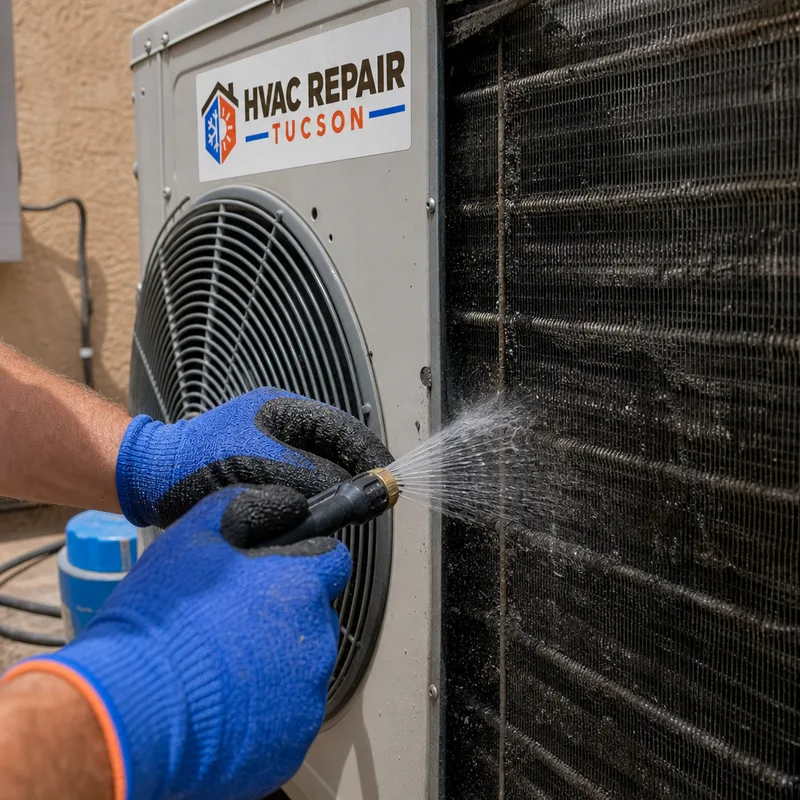
Local reality: Tucson dust loads can clog coils and filters quickly, and restricted airflow is one of the most common reasons a heat pump struggles or gets noisy. A correct diagnosis always includes airflow, not just refrigerant readings.
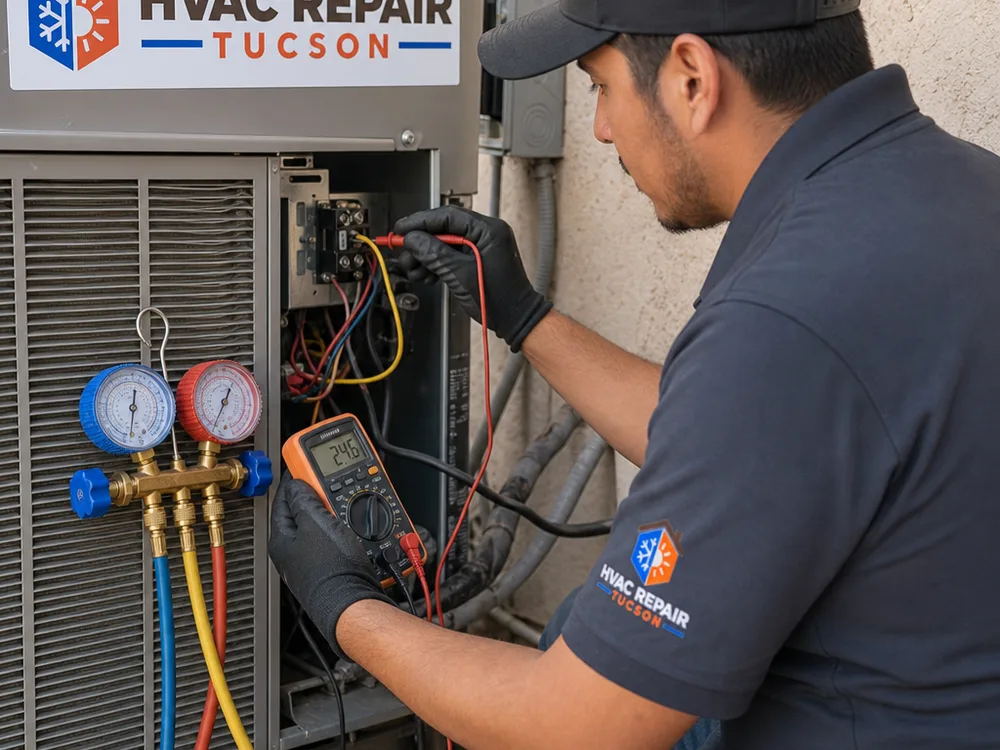
From symptoms to verified operation
Each step is designed to identify the cause, explain the options, and confirm that the heat pump operates correctly after an approved repair.
Tell us what you are seeing: weak airflow, unusual sounds, outdoor unit not running, or comfort issues in specific rooms. The details help us arrive prepared.
We verify thermostat operation, check electrical components, confirm airflow, and test heating and cooling performance. When appropriate, we inspect the outdoor coil, fan system, and defrost controls.
You get a written explanation of what failed, what it affects, and what we recommend. If there are multiple valid paths, we outline them so you can choose based on budget and urgency.
After the repair, we re-test operation in the correct mode, confirm stable pressures and temperatures, and make sure the system cycles normally before we wrap up.
If we see early signs of a bigger issue, such as coil damage or recurring electrical stress, we will point it out and explain what symptoms would justify a follow-up.
Repair cost guidance
Heat pump repair in Tucson typically runs $200 to $900+ depending on the diagnosis and parts needed. Smaller electrical repairs, such as a capacitor or contactor, often fall on the lower end, while refrigerant leak diagnosis and repair, control board replacement, or major motor work can push higher.
Final pricing depends on access, system size, the specific failed component, whether refrigerant work is required, and the condition of coils and airflow. The exact cost is confirmed after on-site diagnostics and a written repair recommendation.
Practical answers before service
It can be normal for a heat pump to deliver air that feels less hot than a gas furnace, but it should still maintain the set temperature. If it cannot keep up, we check airflow—filter, coil, and blower performance—thermostat setup, and refrigerant charge before assuming a major failure.
A new loud sound usually comes from the fan motor, a failing capacitor, loose mounting hardware, or debris contact with the fan blade or shroud. We pinpoint the sound source first, then verify electrical and mechanical readings so the repair solves the cause, not just the symptom.
Yes. Mini-split heat pumps and central heat pumps share core refrigeration and electrical components, but the diagnostics can differ because indoor heads, communication wiring, and control boards are more common on ductless systems.
Short-cycling is typically caused by airflow restriction, incorrect thermostat configuration or placement, failing capacitors or controls, refrigerant issues, or safety limits tripping. In Tucson, dirty coils and clogged filters can contribute, so we verify airflow and system protection controls as part of diagnosis.
Refrigerant should not be consumed, so needing more refrigerant usually means there is a leak or an incorrect previous charge. We can add refrigerant when appropriate, but we will also explain what leak diagnosis involves and whether the system condition makes leak repair a practical next step.
Many failures are same-visit fixes when parts and access cooperate, especially common electrical issues like capacitors and contactors. If diagnostics point to a specialty part, such as certain motors or boards, or to refrigerant leak repairs, we will give you the soonest realistic timeline and any safe interim steps.
If the issue is a single, contained failure and the rest of the system tests well, repair often makes sense. If the system has repeated breakdowns, known refrigerant leak risk, compressor trouble, or major coil deterioration, we will walk you through what continued repair is likely to look like so you can decide with real information.
Restore reliable comfort
Describe the symptoms you are noticing and we will schedule a diagnostic, confirm the cause, and give you clear repair options with straightforward pricing.